
What Is It Actually Like in China? A Full Record of Daily Life and Medical Care for Malaysian Families
From arriving without cash and finding high-speed rail easier than flying, to the modern scale of a Grade 3A hospital and Cantonese doctor-patient communication - this page cuts through the information filter to show what Malaysians genuinely feel, the daily details and the medical environment they meet on first setting foot in China. There is no embellished promotion here; it sets out objectively the real differences Malaysian families face in accommodation, communications, safety and top-tier medical care when they travel to China.
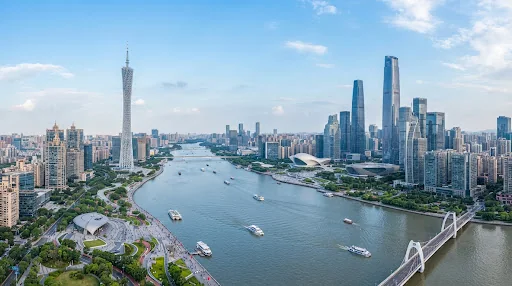
Off the Plane in 4 Hours, No Jet Lag
Cantonese and Mandarin everywhere you turn · Climate and food, a seamless transition
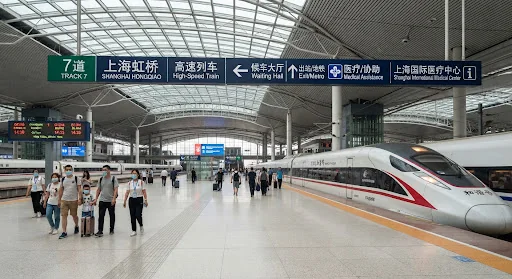
High-Speed Rail Is Less Hassle Than Flying
A coin stands upright at speed, quiet carriages, a dense nationwide rail network
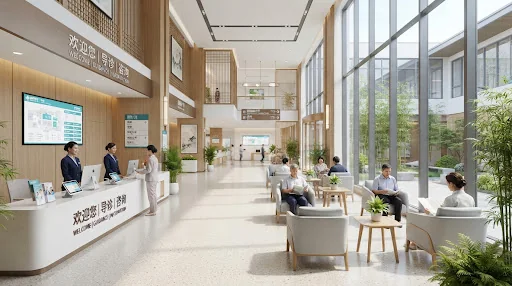
Top-Tier Medical Efficiency on a Different Level
PET-CT results in 24-48 hours · Direct bilingual consultation with senior specialists
Instant Sense of Belonging
KL to Guangzhou is a direct 4-hour flight with zero time difference; scan a code as you leave the cabin and your car is waiting
Cashless in Practice
Link a Malaysian credit card to your phone and it covers 99% of situations, from roadside stalls to jianbing
Sense of Safety MAX
At midnight the streets are as bright as day, delivery reaches the lobby in half an hour, and public order is very stable
Grade 3A Care, Up Close
Tests and reports turned around at very high speed, with bilingual and Cantonese service in the premium departments of national key Grade 3A hospitals
First Impressions on Landing: Sensory Impact and Infrastructure
Airport Scale and High-Speed Rail: On-Time Rates and Remarkable Smoothness
Beijing Daxing · Guangzhou Baiyun · Quiet carriages on the Beijing-Shanghai high-speed lineOn first arriving at Beijing Daxing or Guangzhou Baiyun International Airport, most Malaysian family members describe it as "vast and yet orderly". Indoor air-conditioning is constant, accessible routes are designed with great care, and there are no stairs from the jet bridge all the way to baggage claim.
Public Order and Freedom to Move at Night: Safety Without Worry
Dense street-level camera coverage · Full-trip audio recording and route tracking on DidiIn Kuala Lumpur many people are reluctant to walk alone through quiet streets after dark; in Tianhe in Guangzhou, Jing'an in Shanghai or the core districts of Beijing, that worry simply does not exist.
The "Frictionless" Digital Society and How Malaysians Adapt
Many people used to assume that without a Chinese bank card you could barely get by on the mainland. Today Malaysian phone numbers and bank cards work across the board, and from payments and food delivery to everyday conversation the convenience is striking.
The Smoothness of QR Code Payment
Link Maybank / CIMB and use it straight awayDownload Alipay or WeChat in Kuala Lumpur and link your Malaysian Visa/MasterCard or Touch 'n Go directly. Once you arrive you can buy a bottle of water, take a taxi or even pay a street stall by QR code; there is no overseas transaction fee on a single payment under 200 yuan, and you genuinely feel the ease of "an empty pocket and just a phone".
Food Delivery and Instant Retail, Transformed
Delivered downstairs from the ward in 30 minutesWhile family members keep watch at the hospital, Meituan Instashopping, Ele.me and Freshippo have all but changed their idea of what is possible. Sugar-free high-calcium milk powder for after surgery, a dedicated straw cup, freshly peeled and cut fruit, even fever patches and halal meals - ordered and delivered by rider in as little as 20–30 minutes straight to the hospital reception or the apartment lobby.
Cantonese and Mother Tongue, Seamlessly Connected
The Greater Bay Area feels like homeMany older Malaysian Chinese are used to communicating in Cantonese or in Mandarin with a Nanyang accent. Land in Guangzhou, Shenzhen or another southern Chinese hub, and from airport ground staff and restaurant servers to the ward rounds of a Grade 3A hospital director, authentic Cantonese is everywhere; older patients feel entirely as though they are back in Kuala Lumpur or Ipoh, with no language wariness or sense of distance at all.
What Is It Like to See a Doctor in China?
From the real pace of the premium departments in public Grade 3A hospitals to world-leading equipment density and halal-friendly living, Malaysian patients consistently report a very different state of mind about receiving care.
Efficiency and Equipment on a Different Level
In Malaysia, Europe or the United States, arranging a high-precision PET-CT or a 3.0T high-resolution MRI often takes weeks or even months of scheduling; on the premium pathway at China's leading Grade 3A hospitals, the scan is usually completed within 1–2 days and the detailed films and electronic report, jointly signed by top national radiology professors, are available the next day, winning crucial time in the golden window for treating serious illness.
What the Premium and International Departments of a Grade 3A Hospital Are Really Like
Many Malaysian family members worry that "Chinese hospitals are packed and appointments are hard to get". In practice, what YILV CHINA arranges for cross-border families is precisely the premium clinic and international medical department of a national-level Grade 3A hospital. These have a separate waiting lounge, a coffee and tea bar and private consultation rooms, where a doctoral-supervisor-level professor gives a full one-to-one consultation of more than half an hour, combining the academic depth of a public hospital with the experience of international private care.
Halal Food and Daily Life for Accompanying Family
Within walking distance of hospitals in major Chinese cities there are authentic Lanzhou beef noodle shops, Xinjiang halal restaurants and Hui fresh food markets (such as Xiaobei in Yuexiu, Guangzhou; the Changde Road halal market in Shanghai; and Niujie in Beijing). Serviced apartments have their own induction hob and extractor hood, so families can buy halal-certified fresh meat and cook light, nutritious liquid meals themselves, respecting their faith while meeting clinical dietary targets.
Malaysians in China: Expectations Before and Reality After
Second-hand anxiety versus first-hand composure. A look at the most genuine shifts in thinking among Malaysian families who travelled to China.
Malaysian Families in Their Own Words: The Trip to China Through Their Eyes
Patients and accompanying family members from Kuala Lumpur, Penang and Johor Bahru share what it was personally like to travel to China for treatment and for daily life.
"I took my 68-year-old mother to the Sun Yat-sen University Cancer Center in Guangzhou for a nasopharyngeal lesion. What surprised me most was that the doctor chatted with my mother in very natural Cantonese the whole way through, and she relaxed completely! The Tao Tao Ju and Dian Dou De restaurants beside the hospital suited us fine, much like Petaling Street, and it never felt for a moment like being abroad and suffering."
Mr Lim (Lim W.K.)
Accompanying family member · From Cheras, Kuala Lumpur"In Penang the MRI was going to take four weeks to arrange, but at the premium department of Ruijin in Shanghai I was scheduled the next day for a 3.0T contrast-enhanced scan, and 48 hours later the professor had a precise multidisciplinary plan ready. The apartment was right next to the hospital, groceries and takeaway arrived in half an hour, and the high-speed train to Suzhou took only 20 minutes - truly remarkable efficiency."
Ms Tan (Tan S.M.)
Patient · From George Town, Penang"As a Muslim family, our first worry was halal food. YILV CHINA chose a serviced apartment close to the halal district for us, with strictly halal-certified beef and mutton shops and noodle restaurants nearby. The Malaysian roaming SIM let us use WhatsApp directly without a VPN and video call relatives in Johor Bahru, and the security was ten times more reassuring than I had imagined."
Mr Hafiz (Hafiz R.)
Accompanying family member · From Johor Bahru, JohorSix Real Questions Malaysians Ask About Daily Life and Medical Care
Straight answers to practical worries, removing every uncertainty before you travel.
If you or a family member are weighing treatment in China or a comprehensive health check
There is no need to rush into booking travel and flights. Submit your recent medical records and imaging scans (CD/disc) from your hospital in Malaysia, and our China-Malaysia clinical team will first complete for you an objective "treatment feasibility and China Grade 3A hospital routing pre-screen".